
Office Visit Types - Why Am I Getting A Bill For My Physical?
I am a primary care provider with many years of experience in medicine. Several times each year, I receive questions from patients regarding unexpected charges from recent office visits. These charges often come as a surprise to them. It is also surprising that I, as the provider, do not have control over what their insurance covers.
The Gist:
When you schedule a visit with your primary care provider, it is important to know that each appointment type has a specific purpose. Visits such as annual physicals, medication follow-ups, new patient visits, acute concerns, and Medicare wellness exams all have different rules set by insurance companies. During an annual physical or Medicare wellness visit, providers must follow a strict checklist and cannot fully address new problems, chronic conditions, or extra testing. If those concerns are discussed or managed during the same visit, insurance may count this as a second type of appointment.
Because insurance bills are based on appointment type, combining two visits into one time slot can lead to two separate bills. Even though you were only seen once, insurance may charge for both a preventive visit and a problem-based visit. Appointments are usually limited to 15–20 minutes, which includes check-in and basic health checks. When providers try to cover too much in one visit, it increases the chance of missed details and additional charges.
Worth the Read:
When calling to schedule an appointment with your primary care provider, there are different options for office visits/appointment types. Some examples include:
New patient/establish care:
You are new to the clinic and need a thorough review of your overall health history, medications, surgeries, etc. There is typically not enough time during this visit to address specific health concerns.
Medication start or medication follow-up:
For example, you were recently told you have high blood pressure and need to start medication. During this visit, your provider will review the risks of the medication, how to monitor it, and other ways to manage the condition outside of medication. There will be a follow-up visit to ensure the medication is working and that you have completed any required blood work or labs for monitoring. Usually, after the initial medication follow-up, follow-ups occur every six months to ensure the medication remains effective and safe to continue.
Acute concern:
Something that is happening now and needs to be addressed, such as a rash, a cold, throwing your back out, or wanting your hormones checked.
Annual physical exams (sometimes called preventive exams):
A once-yearly appointment for all insurance plans outside of Medicare. This visit includes a review of basic labs (cholesterol, kidney and liver function, blood counts, thyroid studies—insurance does not typically include or cover labs beyond these) and age-appropriate health screenings (colon cancer, breast cancer, prostate cancer, lung cancer, etc.).
Medicare wellness exams:
A once-yearly appointment for a “health risk assessment” through Medicare and Medicare supplemental plans.
In general, we tend to know what our insurance plan will cover when we attend a medical appointment. There is usually a co-pay, a portion paid by the insurance company, and a final amount we are responsible for. Once we have met our deductible, most appointments are paid for by the insurance company.
The cost of a co-pay and the office visit depends on the type of provider being seen (primary care versus a specialist) as well as the complexity of the visit (for example, a normal cold is less complex than managing multiple conditions such as diabetes, high blood pressure, and high cholesterol).
Annual physicals (outside of Medicare appointments) are typically covered by insurance at 100%, which can make it confusing when a bill is received afterward.
Why did I get a bill?
Insurance companies have very specific requirements regarding what can be reviewed or discussed during an office visit. If these requirements are not followed, the appointment may be viewed as two separate visits, even though you were only seen once. For those who do not have Medicare, this is the template I use for my physical/preventive visits for a female patient:
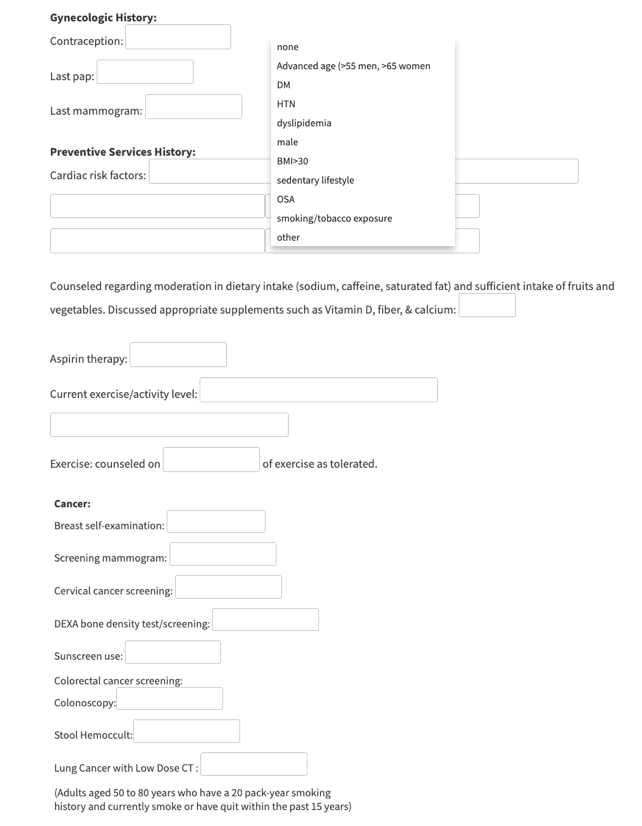
There is no option during this visit to review chronic health concerns (the “risk factors” in the template are different from chronic condition review and management) or to address new concerns—we must stick to the script.
If you attend your physical/preventive visit and ask to add additional blood work that is not included, those tests and the reasons behind them are considered part of a “concern.” This will likely reflex to being considered a second visit type. For example, if you have low libido and want your testosterone or estrogen levels checked, this is not considered a preventive issue under insurance guidelines. This is why some patients receive a second bill.
Another example includes patients with multiple chronic conditions who are taking several medications. Reviewing whether medications are safe and effective is not included in this visit. If we complete both your physical and a medication review with any required testing to maintain those medications, two appointments have effectively been combined: an annual physical and a medication follow-up.
For you Medicare Folks:
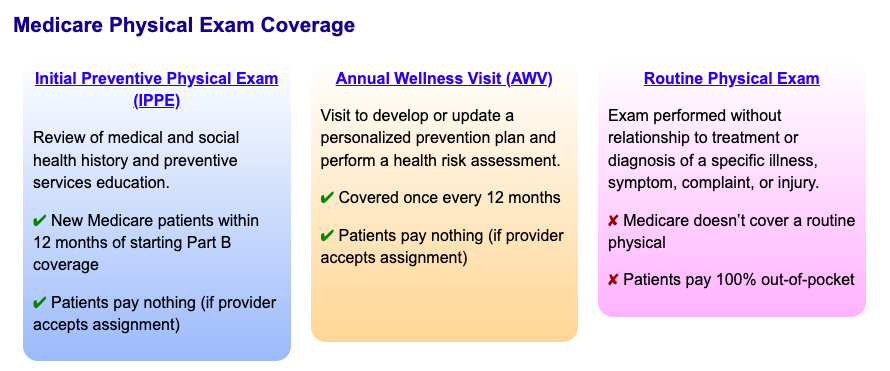
For the Medicare Annual Wellness Visit, Medicare views this appointment as an opportunity to assess potential health risks. These assessments may include fall risk, vaccination status, and home safety factors such as living alone, having stairs in the home, or ensuring working smoke detectors are present.
This is why, during a Medicare wellness exam, the provider will not physically examine you. If a physical exam is performed, the visit is reclassified as a physical (physical contact = physical exam). As shown in the image, patients are responsible for 100% of the cost of a physical exam when covered by Medicare.
For chronic condition management, similar to all other insurances, it is considered a separate visit. Per medicare.gov:
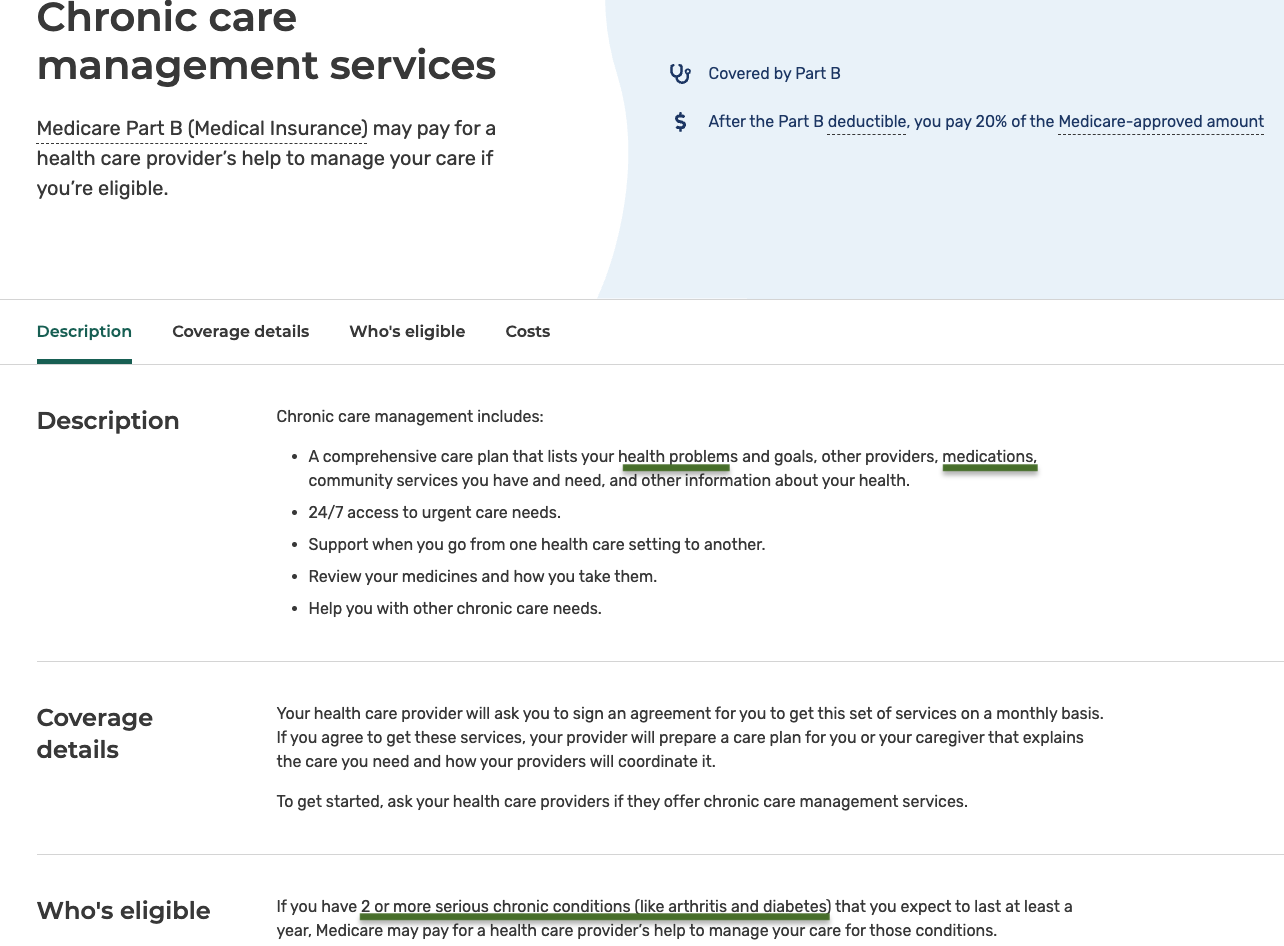
imaged obtained from CMS website: https://www.medicare.gov/coverage/chronic-care-management-services#coverage-content-description
Now a final consideration: doing two appointments at the same time
I have several patients who prefer to do everything at once. Instead of coming in twice—finding childcare and taking time off work—it can feel easier to complete both visits at the same time and be billed accordingly.
It is becoming industry standard to limit appointment times. Some clinics allow flexibility in appointment length (for example, a Medicare wellness visit may be 30 minutes, while a visit for a cold may be allotted 10 minutes), but more often than not, visits with medical providers are limited to 15–20 minutes - regardless of visit type. I have had many patients describe feeling “rushed” or noticing that their provider is spending less time with them. These feelings are valid—because it is true.
Whether you are new to the clinic or being seen for a routine office visit, 20 minutes is now the typical time allotted for any appointment. This 20 minute visit time also includes check-in with support staff, vital signs such as blood pressure, and reviewing medications and the reason for your visit. When visits are combined (for example, a physical and an acute concern), there is a lot to review, and there is an increased risk of missing something.
As time goes on, we are finding that insurance requirements increasingly direct the care that is provided. The goals of this directed care come from a good place—insurance companies base these exam types and requirements on evidence-based guidelines. However, they do not do a good job of explaining what this looks like in practice. This is why, at times, patients may receive two bills for a single office visit.
